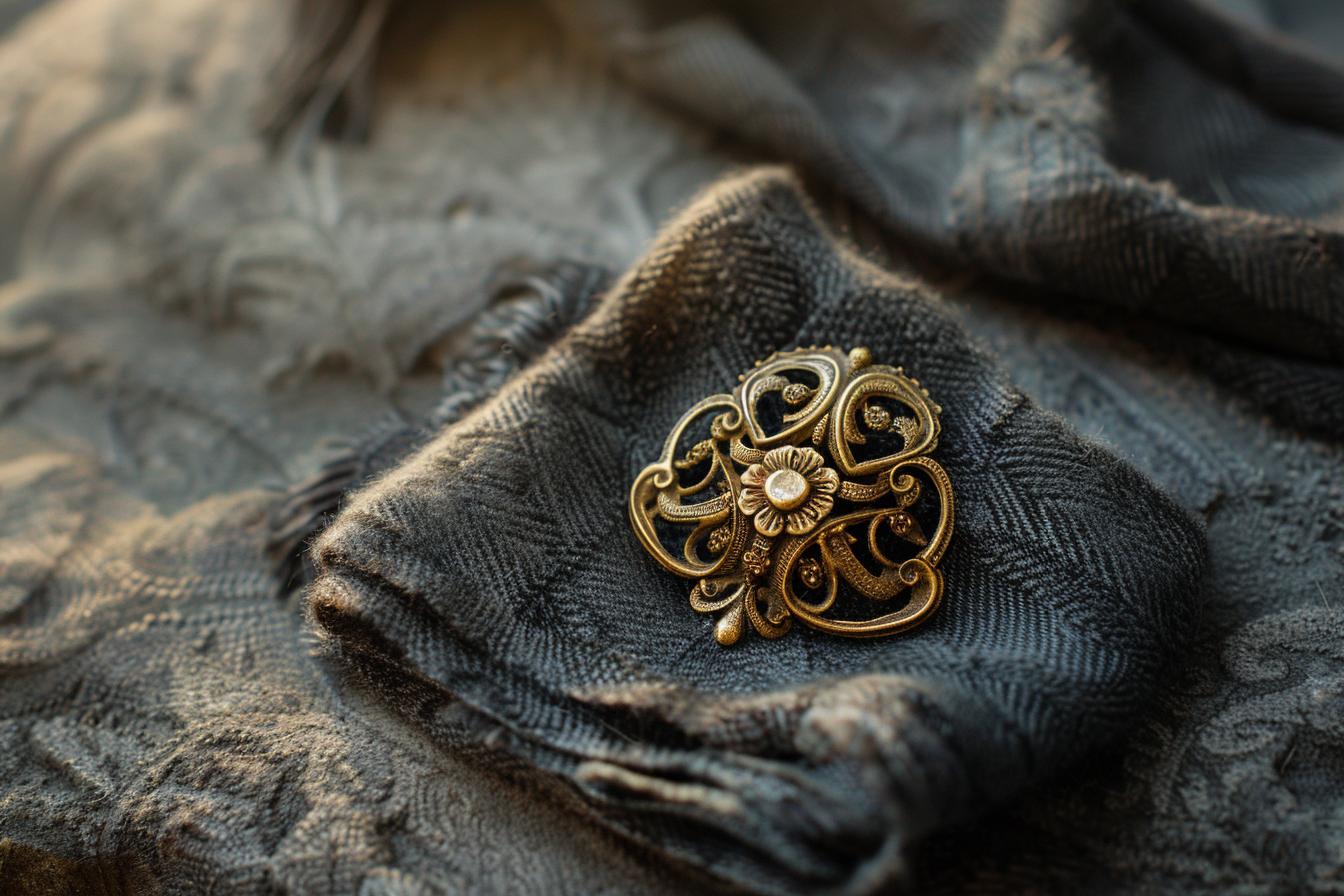
Searches for “brooch aesthetic” are up 110%. “Heirloom jewelry,” up 45%. “Maximalist accessories,” up 105%. Pinterest has given the whole thing a name — Brooched — and filed it as a defining 2026 trend.
Which is a strange thing to read in the same season that fashion commentary keeps declaring quiet luxury dead. Both stories are running at once, and they are not actually in conflict. They’re the same story told from two ends.
Key takeaways
- Pinterest named Brooched a 2026 trend — “brooch aesthetic” +110%, “heirloom jewelry” +45%
- This is not the opposite of quiet luxury — it’s what happens when restraint gets bored
- A brooch is the rare accessory that reads as inherited rather than bought
- The rule that keeps it elegant: one ornament, on plain ground
Why are brooches suddenly everywhere?
Because the wardrobe that quiet luxury built is, by design, finished. Once you own the good coat, the plain knit and the unfussy bag, there is nothing left to decide. That’s the point of it — and eventually, the problem with it.
A brooch is the smallest possible act of rebellion against that wardrobe. It doesn’t require replacing anything. It sits on top of the restraint you’ve already bought, and it makes the whole outfit look chosen rather than merely correct.
Structure holds. Ornament breathes. The interesting clothes have always been the ones doing both at once.
What makes a brooch read as heirloom rather than costume?
Three things, none of which is price.
- Weight. Costume brooches are light and hollow. Something with heft sits differently on fabric and drapes it slightly — the single clearest tell.
- An unfashionable shape. Insects, bows, sheaves of wheat, unidentifiable florals. If it looks like it was designed for a decade that isn’t this one, it reads as inherited.
- Patina. Slightly dulled metal looks older and more expensive than a high shine. Resist polishing it to brightness.
This is one of the few accessory categories where the secondhand market genuinely outperforms new. Estate lots, market stalls and your own family’s jewellery boxes hold pieces that are heavier and stranger than most of what’s currently produced.
Shop vintage-style brooches → — look for weight and an odd, specific shape rather than a set.
Shop a jewellery box that protects pins → — brooches scratch anything they’re stored loose with.
Where do you actually put it?
The lapel is the obvious answer and the least interesting one. The placements that look considered rather than costumed:
- High on the shoulder of a plain coat — nearly at the seam, where a military decoration would sit.
- At the centre of a scarf knot, holding it rather than decorating it.
- On a knit, low and slightly off-centre, which stops it looking like a uniform.
- At the waist of a plain dress, doing the work a belt would.
- On a bag, if it’s a bag with no hardware of its own.
The constant: plain ground. A brooch on a patterned or embellished garment becomes noise. On flat, unbroken fabric it becomes the sentence.
The turn: the case against
There’s a reason brooches fell out of favour, and it’s worth stating plainly. They pierce fabric. On fine knits and silk, a heavy pin will leave marks that don’t recover. The safe ground is structured wool, denim, coating and heavy cotton — not your good cashmere.
And the trend has an obvious failure mode. “Maximalist accessories” rising 105% alongside the brooch revival means a lot of people are about to wear four at once. Grouped brooches are a real styling tradition, but they demand an extremely plain everything-else, and most attempts won’t clear that bar.
THE GILT take: this is not the end of quiet luxury, whatever the headlines say. It’s the correction to it. A decade of buying beige taught a lot of women to dress inoffensively, which is not the same as dressing well. One heavy, slightly odd, probably inherited object on an otherwise plain outfit is the fastest available proof that a person is in there making decisions.
What do different brooch styles signal?
Not all of them read the same way. Shape does most of the communicating before anyone registers the material.
| Style | Reads as | Wears best on |
|---|---|---|
| Insect (bee, beetle, dragonfly) | Eccentric, collected, slightly Victorian | A plain lapel or high on a coat shoulder |
| Bow or ribbon | Romantic without being girlish | Knitwear, or at a scarf knot |
| Floral spray | Inherited — the most grandmother-coded shape, in a good way | Heavy wool, tweed, denim |
| Cameo or portrait | Deliberately antique; needs conviction | Plain black or ivory, nothing patterned |
| Geometric or Deco | Modern, architectural, closest to quiet luxury | Tailoring — blazers, structured coats |
| Enamel animal | Playful; the least serious option here | Denim, casual knits, a bag |
If you own one brooch, the geometric or Deco shape is the most versatile — it sits comfortably with the restrained wardrobe most readers already have, which is exactly the point of the trend.
Where do you find vintage brooches?
This is a category where the secondhand market genuinely beats new, both on price and on the qualities — weight, odd shapes, patina — that make a brooch read as heirloom.
- Family first. Genuinely: ask. Brooches are among the most commonly kept and least commonly worn inherited items, and they’re usually sitting in a drawer.
- Estate and charity shops. Costume jewellery is routinely underpriced because it isn’t precious metal — which is irrelevant to how it looks.
- Antique markets and fairs. The advantage is being able to feel the weight before buying, which is the single hardest thing to judge from a photograph.
- Online resale. Widest selection, hardest to assess. Ask for a photograph of the pin mechanism and of the back — both reveal age and quality faster than the front does.
What to check before buying
The clasp matters more than the stones. A pin that doesn’t close firmly will be lost, and replacing a mechanism usually costs more than the brooch. Open and close it several times; there should be resistance and a definite click.
Check the back for solder repairs, and check that any stones sit level in their settings. A slightly dulled finish is desirable; a wobbling stone is not.
Can you wear more than one?
Yes, and given that “maximalist accessories” is up 105% alongside this trend, a lot of people are about to try. Grouped brooches are a real and long-standing styling tradition — but they follow rules, and ignoring them is what produces the costume effect.
- Odd numbers. Three reads as a deliberate arrangement; two reads as a mistake.
- One shared quality. All the same metal tone, or all the same era, or all the same subject. Without a common thread it’s a lost-property drawer.
- Vary the size. Equal-sized pieces compete. One clearly dominant brooch with two smaller ones is the reliable structure.
- Cluster, don’t scatter. Grouped closely on one side reads intentional; distributed evenly across a garment reads uniform.
- Then plain everything else. No necklace, no statement earring. The cluster is the entire accessory budget for that outfit.
Six vintage brooches worth looking at right now
Everything above argues that weight, an unfashionable shape and a bit of patina are what separate an heirloom-looking brooch from a costume one. Here are six currently listed pieces that demonstrate the point across an unusually wide price range — from under twenty dollars to four and a half thousand.
They are grouped by the style categories in the table above, so you can see how shape does the communicating. Each is a single vintage piece, so if one has sold by the time you read this, the search link at the end of this section will still find its equivalent.
Ruby and sapphire 14K gold flower brooch, Van Cleef style — $4,500
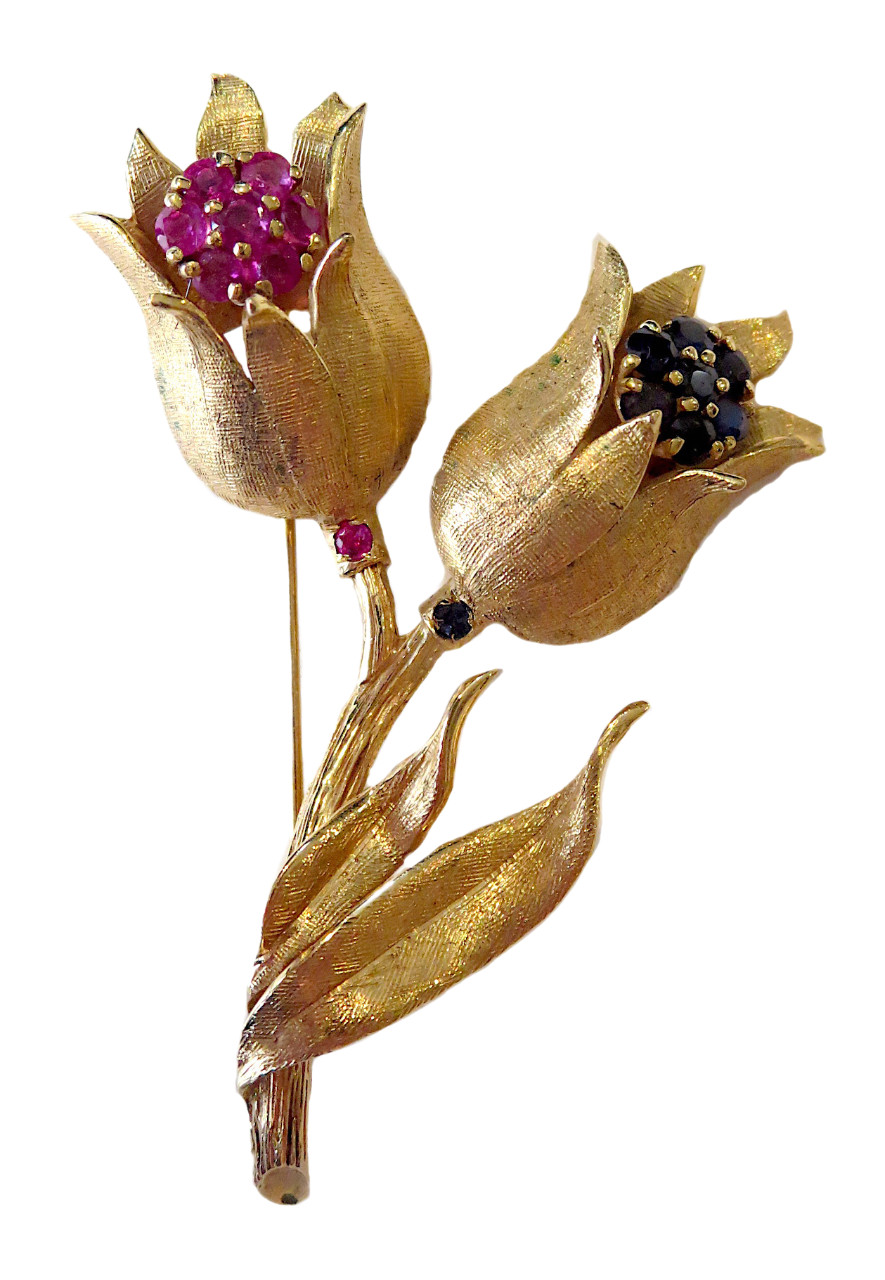
Style: Floral spray. The reference point for everything else on this list. Solid 14K yellow gold, ruby and sapphire, in the dense floral-spray shape that reads as inherited rather than bought. This is what the others are gesturing at.
Sajen goddess pendant / brooch in silver and mother of pearl — $575
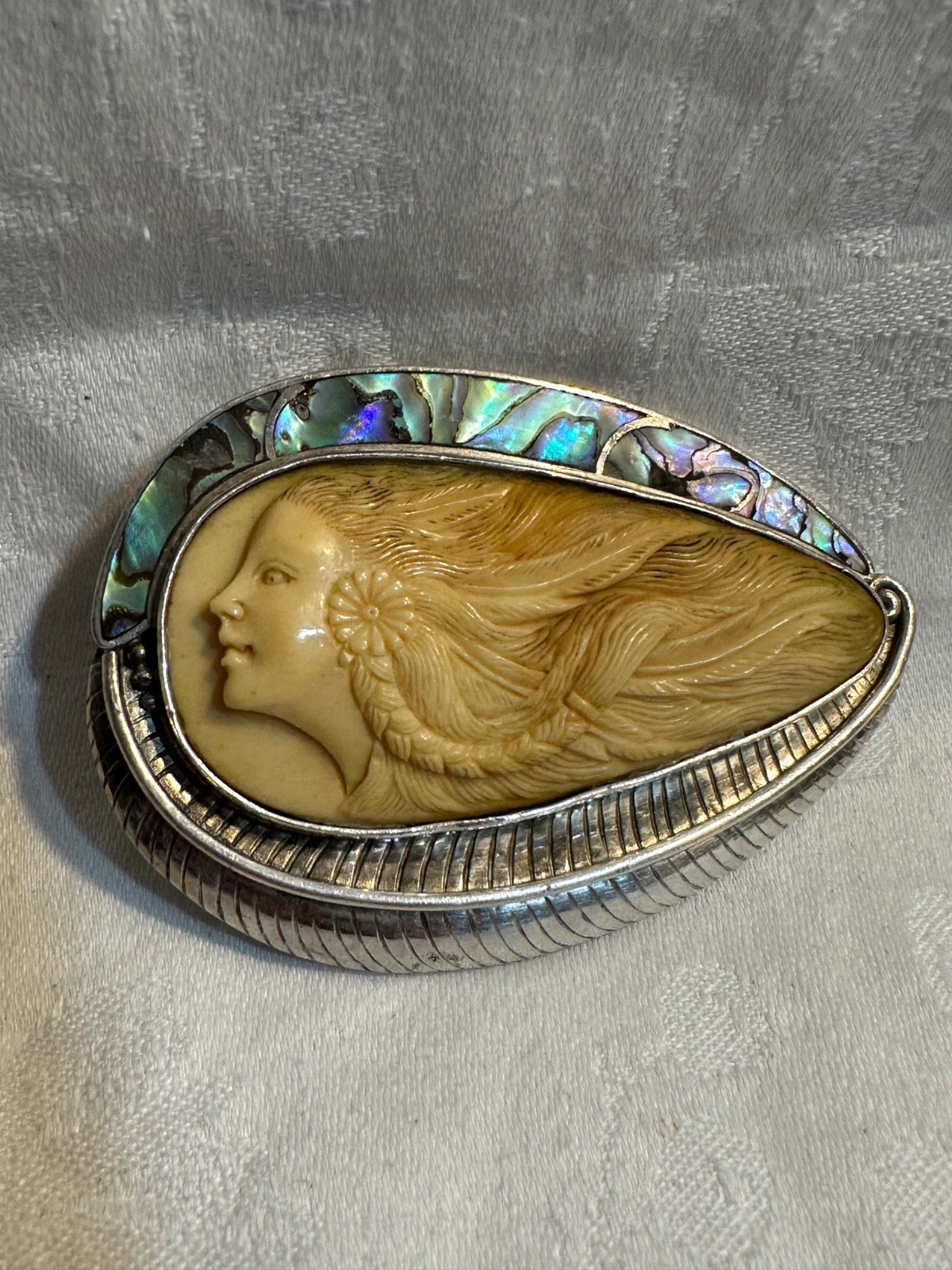
Style: Cameo or portrait. A carved goddess in mother of pearl and abalone, signed, 2.5 inches. Cameo-adjacent and considerably stranger than a conventional portrait brooch — which is precisely the quality that stops it looking costume.
Japanese nunome-zogan birds brooch in brass — $329
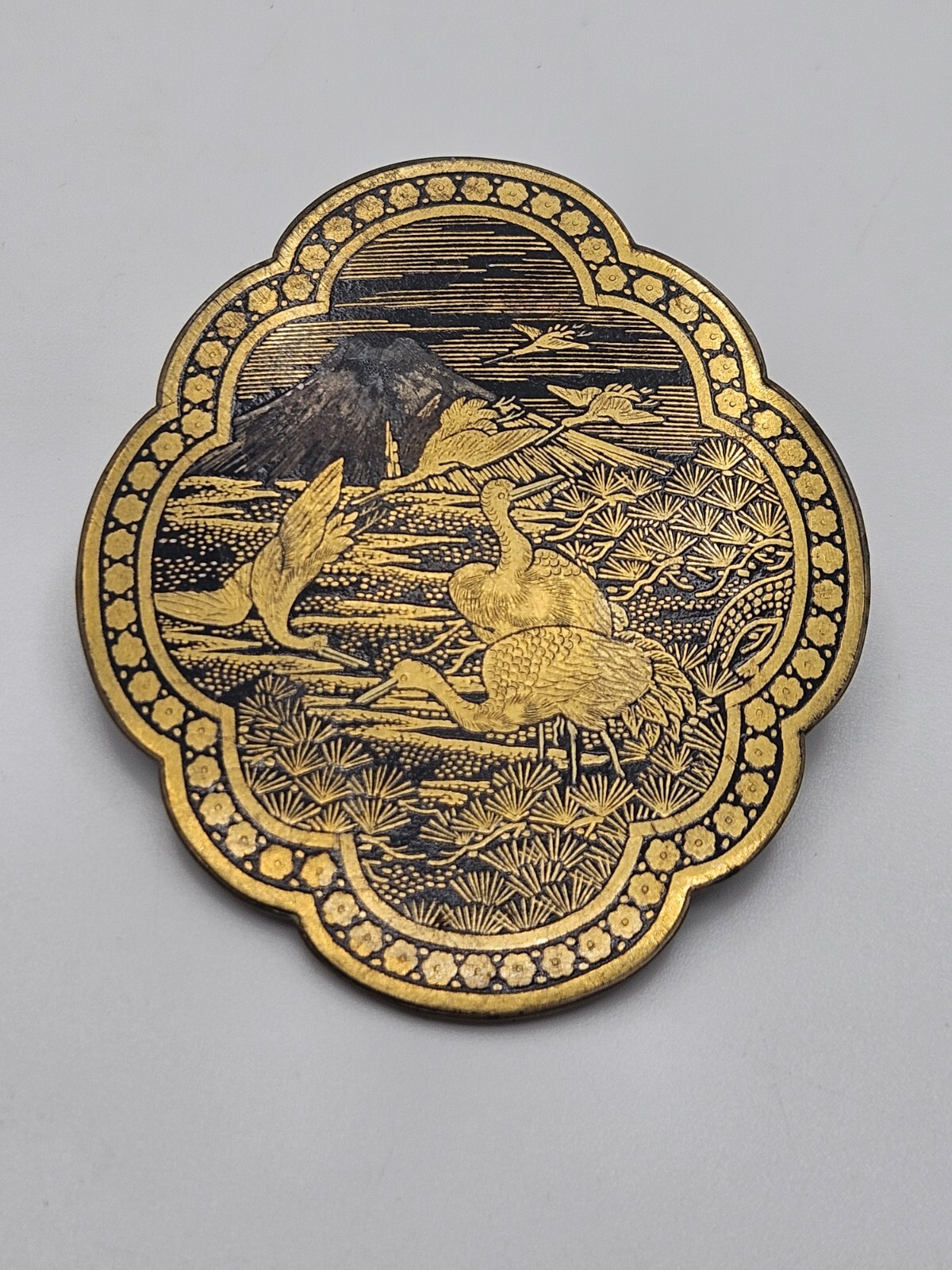
Style: Enamel animal. Nunome-zogan is a Japanese damascening technique — gold and silver inlaid into scored metal. Large, brass, unmistakably hand-worked. The best argument on this page for buying by technique rather than by name.
Trifari ‘Jelly Belly’ duck brooch by Alfred Philippe — $295
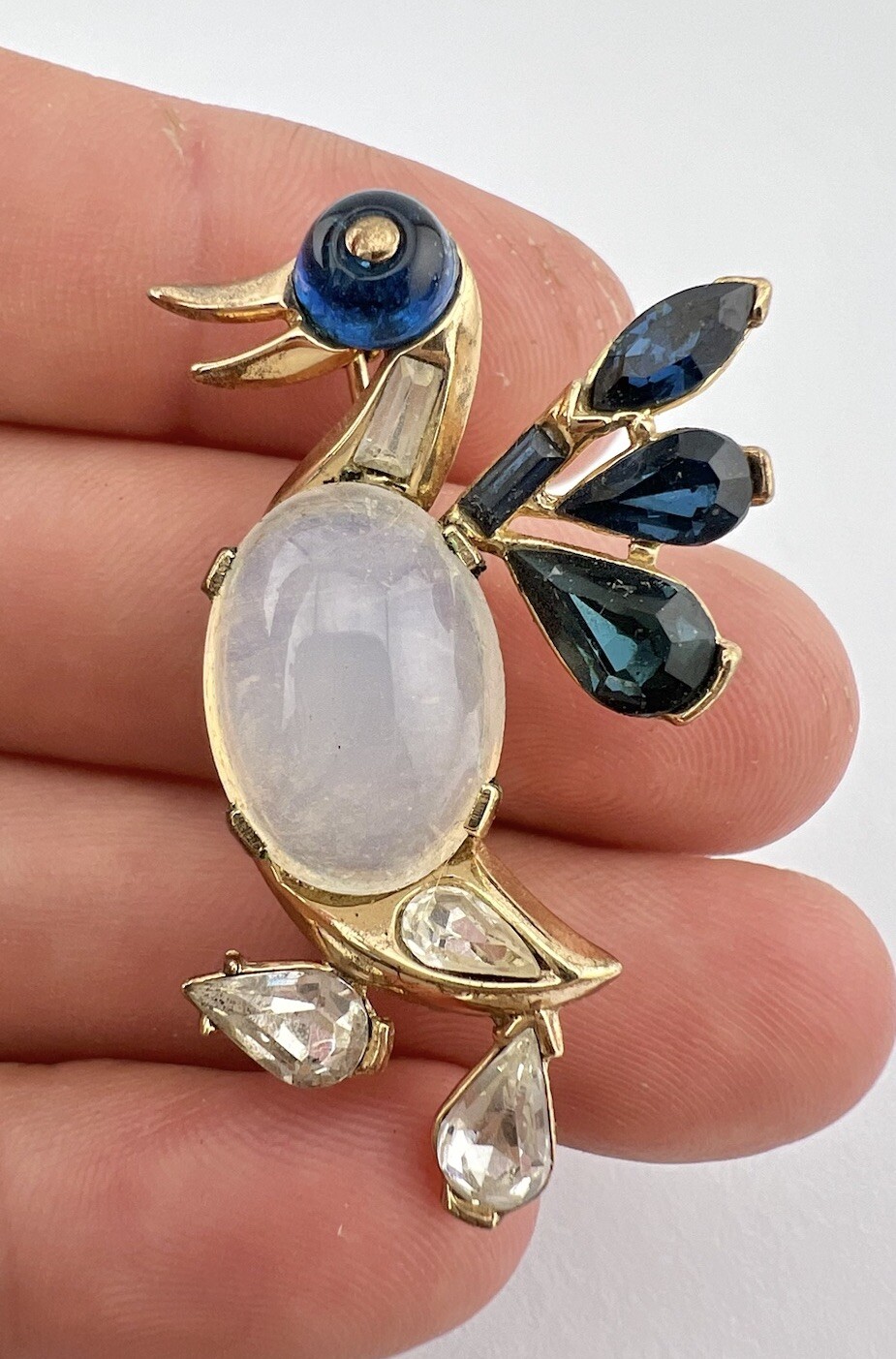
Style: Enamel animal. Signed Alfred Philippe for Crown Trifari, from the 1935–1950 retro period. Jelly Bellies are among the most collected American costume pieces of the century, and this is a properly attributed one.
Vintage rhinestone swirl brooch, gift boxed — $19.95
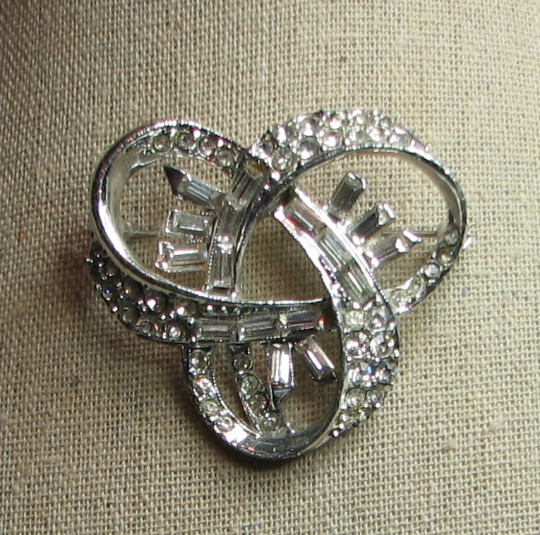
Style: Geometric or Deco. The swirl is the Art Nouveau whiplash line, which is the same curve running through The Gilt’s own identity. Under twenty dollars, and it does the job a brooch is supposed to do.
Vintage silver-tone rhinestone swirl brooch — $19
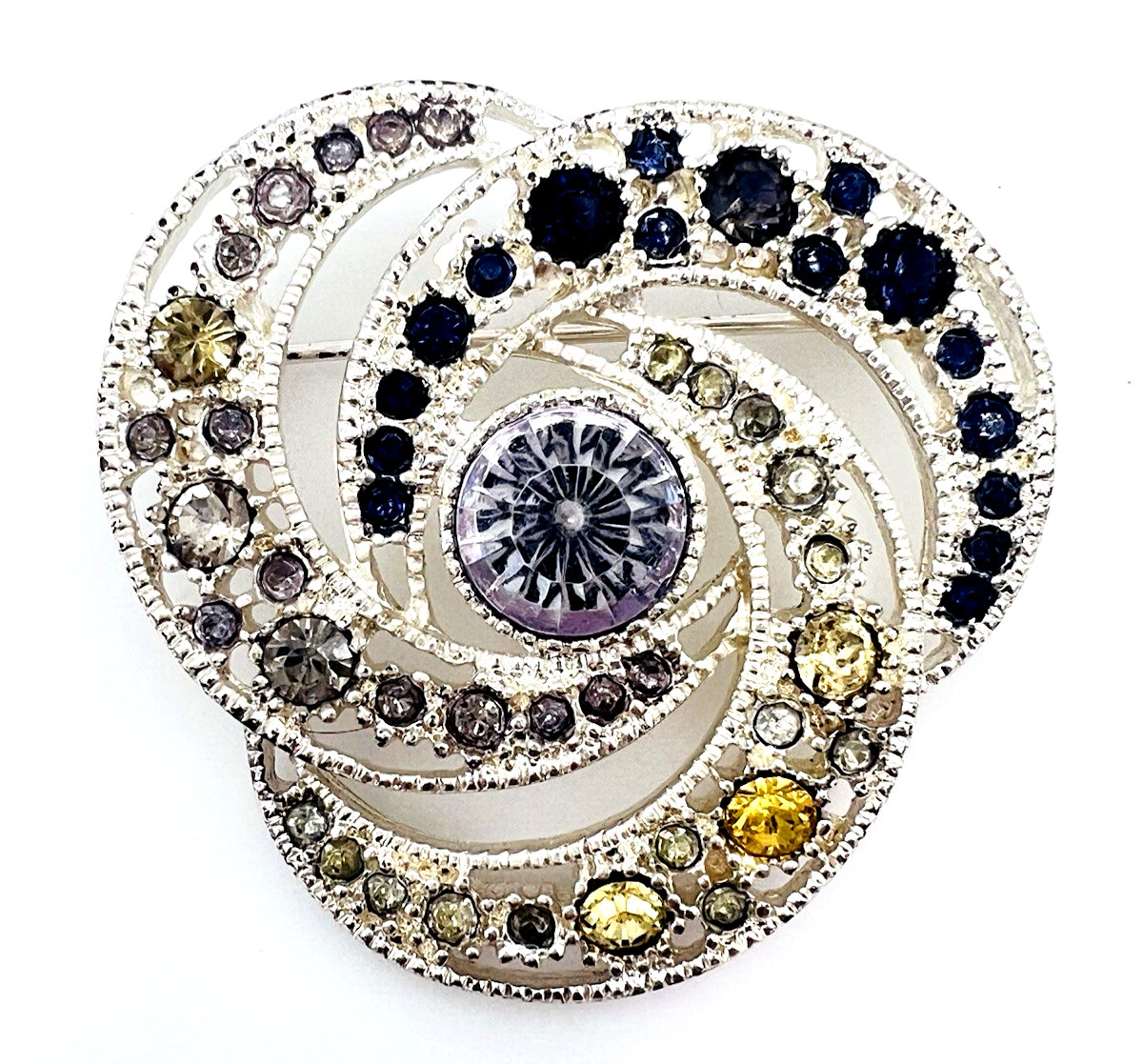
Style: Geometric or Deco. The same motif in silver tone, with a secure clasp — which, as noted above, matters more than the stones. A sensible first brooch if you’re testing whether you’ll actually wear one.
If these have sold
Vintage listings are one-off by definition, and the good ones move. Browse current vintage brooch listings on eBay → — and apply the same three tests: heft in the hand, a shape that belongs to another decade, and a clasp that closes with a definite click.
Prices above were correct on 6 August 2026 and will change. We earn a commission on purchases made through these links, at no additional cost to you.
Frequently asked questions
Are brooches actually trending in 2026?
Yes — Pinterest named Brooched one of its 2026 trends, reporting “brooch aesthetic” up 110%, “heirloom jewelry” up 45%, and “maximalist accessories” up 105%.
Doesn’t a brooch contradict quiet luxury?
Only if quiet luxury is understood as an absence of decoration. Read instead as restraint plus one deliberate detail, a single well-chosen brooch is entirely consistent with it — and considerably more interesting.
Will a brooch damage my clothes?
It can. Heavy pins leave permanent holes in fine knits and silk. Wear them on structured, densely woven fabrics — wool coats, blazers, denim, heavy cotton — and keep them off delicate pieces.
Is it better to buy vintage or new?
Vintage, generally. Older brooches tend to be heavier and stranger in shape, which is precisely what makes them read as inherited rather than bought this season.
Sources & further reading:
Disclosure: This post contains affiliate links. If you buy through them, THE GILT may earn a commission at no extra cost to you. We only recommend products that meet our evidence and usefulness standards.
Leave a Reply